Single/double wearable breast pump
At a glance
- Introduction
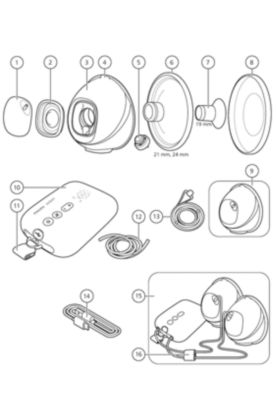
- General description (Fig. 1)
- Intended use
- Important safety information
- Before first use
- Cleaning and disinfecting
- Using the breast pump
- Compatibility
- Ordering accessories and spare parts
- Recycling
- Removal of built-in rechargeable battery
- Support
- Troubleshooting
- Supplemental information
- Storage
- Electromagnetic fields (EMF)
- Technical specifications
- Explanation of symbols
Welcome to Philips Avent! To learn more about this product or the Philips Avent product range, scan the QR code on the user manual or visit us at www.philips.com/support. On this website, you will also find the full user manual, videos and frequently asked questions.
The Philips Avent hands-free single/double electric breast pump is intended to express and collect milk from the breast of a lactating woman. The device is intended for a single user.
Read this user manual carefully before you use the breast pump and save it for future reference.

Never use the breast pump while you are pregnant, as pumping can induce labor.
Warnings to avoid choking, strangulation and injury:
Never use the breast pump while driving to avoid accidents due to reduced attention.
Children and pets should be supervised to ensure that they do not play with the motor unit, packaging materials or accessories.
Make sure that you use the silicone tube, carrying cord, and USB cable carefully to avoid strangulation.
This breast pump is not intended for use by persons (including children) with reduced physical, sensory or mental capabilities, or lack of experience and knowledge. Such persons can only use this breast pump if they are supervised by or have received proper instruction concerning use of the appliance by a person responsible for their safety.
Warning to prevent transmitting infectious diseases:
If you are a mother who is infected with Hepatitis B, Hepatitis C or Human Immunodeficiency Virus (HIV), expressing breast milk will not reduce or remove the risk of transmitting the virus to your baby through your breast milk.
Warnings to avoid electric shock:
If a power adapter (not included) is used for charging, only use a certified double-insulated USB power adapter. Check if the symbol for double insulation is on the adapter:
When using a USB power adapter (not included) to charge or operate the breast pump: inspect the adapter for signs of damage before charging. Do not use if the adapter is damaged, or outer casing becomes loose or is separating. Separation of the casing can result in electric shock.
Inspect the breast pump for signs of damage before each use or if it has been dropped. Do not use the breast pump if it is damaged or does not work properly, or if it has been submerged in water.
Always ensure that it is easy to disconnect the device from the mains in case of malfunction.

Warnings to avoid contamination and to ensure hygiene:
For hygienic reasons, the breast pump is only intended for repeated use by a single user.
Clean and disinfect all parts that come into contact with the breast and breast milk before first use and after each use. If you use inserts and/or breast shields of different sizes during the pumping session, make sure to clean and disinfect all such parts.
Store and transport the collection cup using the breast shield (dust) cover.
Warnings to avoid breast and nipple problems including pain:
Do not use the breast pump if the membrane appears to be damaged or broken. See ‘Ordering accessories and spare parts’ for information on how to obtain replacement parts.
Only use accessories and parts recommended by Philips Avent.
No modification of the breast pump is allowed. If you do so, your warranty becomes invalid.
Never use the breast pump while you are sleepy or drowsy to avoid lack of attention during use.
If the vacuum is uncomfortable or causes pain, switch off the motor unit and remove the collection cup from your breast.
Contact your healthcare professional or breastfeeding specialist if you express no or insufficient milk or if your breast is painful, hot, swollen, or red.
Warnings to prevent damage and malfunction of the breast pump:
Portable radio frequency (RF) communications equipment (including mobile phones and peripherals such as antenna cables and external antennas) should not be used closer than 30 cm (12 in) to any part of the breast pump, including external power supply. This could have a negative effect on the performance of the breast pump.
Use of this equipment adjacent to or stacked with other equipment should be avoided because it could result in improper operation.
Battery safety instructions
Only use the product for its intended purpose. Read this important information carefully before you use the product and its batteries and accessories, and save it for future reference. Misuse can lead to hazards or serious injuries.
Accessories supplied may vary for different products.
Charge, use and store the product at the temperature ranges indicated in the technical specifications chapter in this user manual.
Keep product and batteries away from fire and do not expose them to direct sunlight or high temperatures.
If the product becomes abnormally hot or smelly, changes color or if charging takes longer than usual, stop using and charging the product and contact Philips.
Do not place products and their batteries in microwave ovens or on induction cookers.
Do not open, modify, pierce, damage or dismantle the product or battery to prevent batteries from heating up or releasing toxic or hazardous substances. Do not short-circuit, overcharge or reverse charge batteries.
Be aware of the risk of terminals of the battery-operated appliance or battery being short-circuited by metal objects.
If batteries are damaged or leaking, avoid contact with the skin or eyes. If this occurs, immediately rinse well with water and seek medical care.

Cautions to prevent damage to and malfunctioning of the breast pump:
Prevent the USB power adapter (not included), USB cable, and motor unit from coming into contact with water.
Keep all parts away from heated surfaces to avoid overheating and deformation of these parts.
Disassemble, clean and disinfect all parts that come into contact with the breast and breast milk before you use the breast pump for the first time and after each use.
Fully charge the device before you use it for the first time or after a long period of non-use.
Disassemble, clean and disinfect the following parts before first use and after every use: membrane, cup, valve, breast shield, insert (if used), breast shield (dust) cover.
Clean the front cap, silicone tube, tube coupler (included with the double breast pump), carrying cord, USB cable, and motor unit (including the clip) when needed. Wipe with a clean, damp cloth with water and mild detergent.
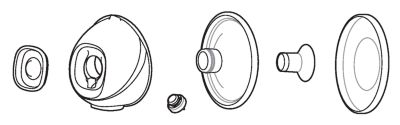
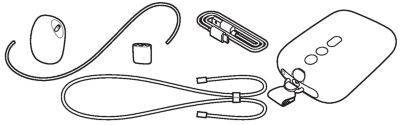
Step 1: Disassembling
Completely disassemble all parts that come into contact with the breast and breast milk. Make sure that you:
Remove the valve from the cup.
Separate the membrane and front cap.
Remove the insert (if used) from the breast shield.
Step 2: Cleaning
Clean the following parts before first use and after every use: membrane, cup, valve, breast shield, insert (if used), breast shield (dust) cover. You can clean these parts manually or in the dishwasher.
Step 2A: Manual cleaning
Supplies needed:
Step 2B: Cleaning in the dishwasher
Supplies needed:
Mild dishwashing liquid or a dishwashing tablet
Drinking-quality water

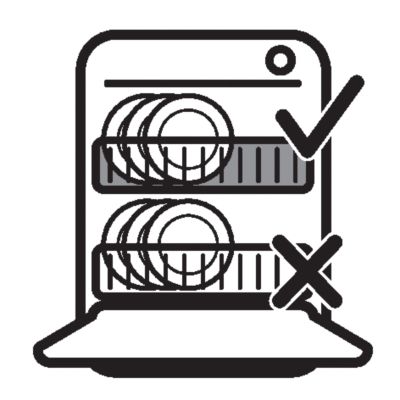
Place all parts on the top rack of the dishwasher. Use a dishwasher basket for the smallest parts.
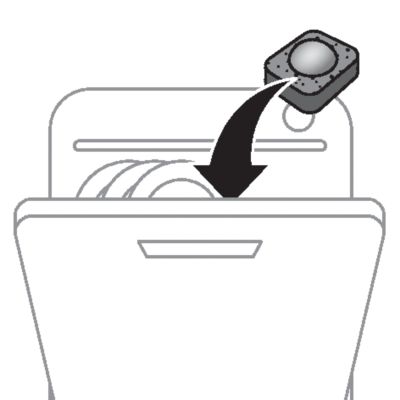
Put detergent or a dishwashing tablet in the machine and run a standard program.
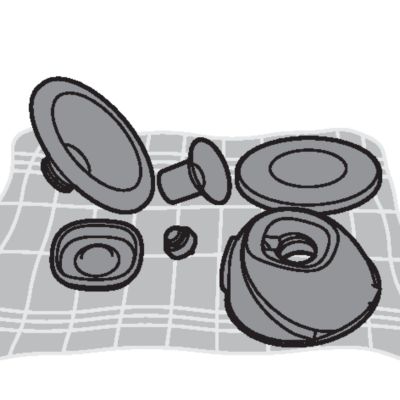
Leave the parts to air-dry on a clean tea towel or drying rack.
Step 3: Disinfecting
Supplies needed:
Household pot
Drinking-quality water
Disassemble, clean and disinfect the following parts before first use and after every use: membrane, cup, valve, breast shield, insert (if used), breast shield (dust) cover.
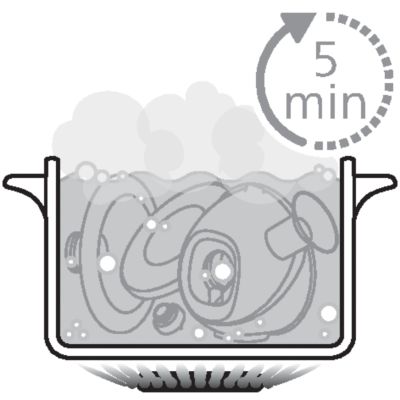
Fill a household pot with enough water to cover these parts and place all the parts in the pot. Let the water boil for 5 minutes. Make sure the parts do not touch the sides and bottom of the pot.
Allow the water to cool down.
Gently remove the parts from the water. Leave the parts to air-dry on a clean tea towel or drying rack.
Store the dry items safely in a clean, protected area until needed. Ensure that the clean parts have air-dried completely before storing them to help prevent germs and mold from growing.
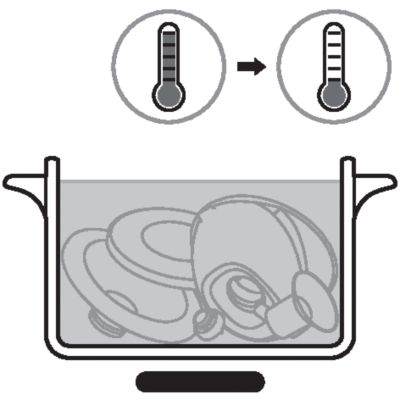
The collection cup parts are microwave sterilizer safe and steam sterilizer safe. Follow the instructions of the sterilizer manufacturer.
Charging the breast pump
Fully charge the battery before you use the breast pump for the first time and when the battery is low. Fully charging the battery takes up to 1.5 hours.
Use a power source (an adapter or a power bank) with a USB port, of 5 V direct current/2 A or 10 W for your breast pump. Using a power source with lower specifications might result in slow charging or being unable to pump while connected to a wall socket.
Switch off the device.
Insert the small plug of the USB cable into the motor unit and insert the other end of the USB cable into a USB power source, e.g. adapter or laptop.
The battery lights light up one by one and then all go out: the battery is charging.
All 3 lights are steady on: the battery is fully charged.
Remove the USB cable from the USB power source and pull the small plug out of the motor unit.

Battery indicator light description
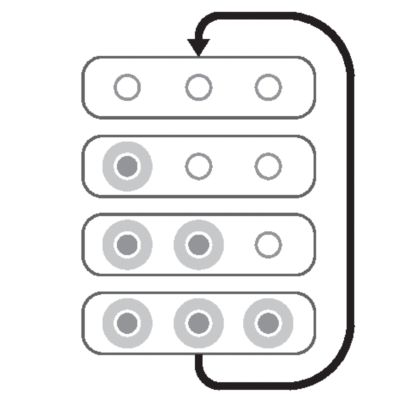
The battery indicator lights show the battery capacity.
Three lights are steady on: the battery is fully charged for approximately 5 pumping sessions.* | Two lights are steady on: the battery is charged sufficiently for 2–3 sessions.* | One light flashes slowly: the battery is charged sufficiently for maximum 1 session. Charging is needed soon.* | First light flashes quickly: the battery is very low, the device will stop operating soon. Charging is needed. |
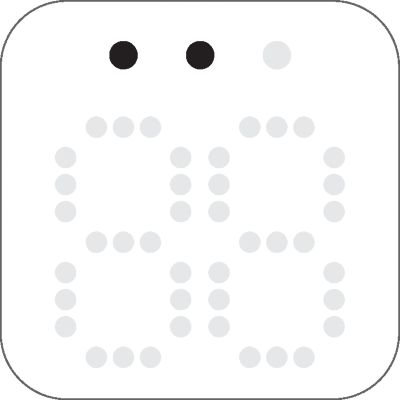
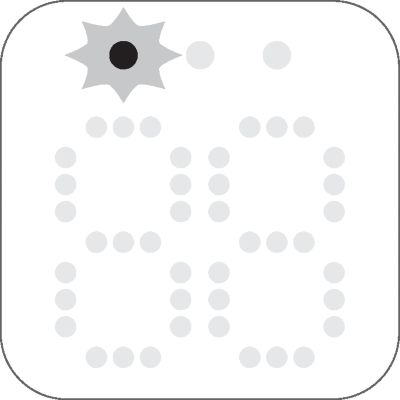
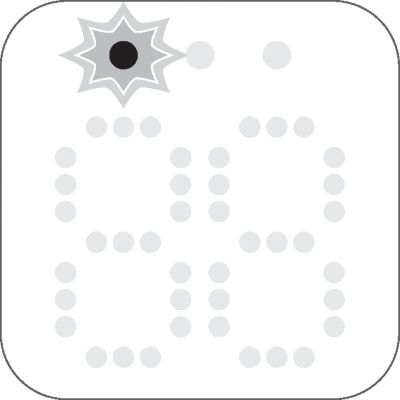
* One session is 15 minutes of pumping (double breast pump) or 30 minutes of pumping (single breast pump).
Sizes of the breast shields and inserts
The Philips Avent hands-free breast pump has a soft breast shield that can be used individually or with a flexible silicone insert for a better comfort. There are multiple sizes available.
Measure your nipple to find the most suitable breast shield and, if necessary, the insert for you.
Use the nipple sizing card that is included in the package or refer to www.philips.com/support to measure your nipples.
Stimulate your nipple prior to measuring your size.
Place the nipple sizing card around your nipple. Make sure there is a space of 0.5–2 mm between your nipple and the hole in the nipple sizing card.
Try various holes to see which opening fits your nipple best. If needed, view fitting in a mirror.
Select the breast shield (and the insert) that matches the hole that fits your nipple best.
Breast shield sizes 21 mm, 24 mm, and insert size 19 mm are included in the package.
Breast shield size 28 mm and insert sizes 15 mm, 17 mm, 26 mm can be purchased separately.
Start pumping by using the selected size(s) and closely monitor your comfort. After pumping, the nipple size might slightly change. If pumping becomes uncomfortable, measure your nipple size again and switch to another size, if needed.
Assembling the breast pump
Make sure you have cleaned and disinfected the parts of the breast pump that come into contact with the breast and breast milk. Gather all parts and place them on a clean surface.
Check the breast pump parts for damage before use and replace them if necessary.
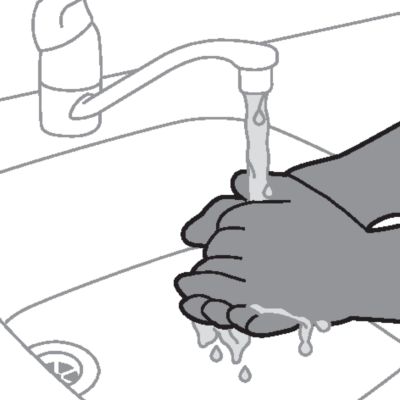
Wash your hands thoroughly with soap and water.
Push the valve into the cup as far as possible.
Attach the membrane to the cup.
Attach the front cap to the membrane and the cup. You can choose one of 4 possible positions of the front cap, to orient the silicone tube as preferred. Choose the most comfortable position for you. Push down the membrane cap until it is securely in place.
If you use an insert, first place the insert into the breast shield fully.
Attach the breast shield (including the insert, if any) to the cup. Push the inner part of the breast shield into the cup as far as possible. Make sure that the rim of the breast shield covers the sides of the cup fully.
Connect the silicone tube to the front cap and the motor unit.
When the breast pump is charged, you can use it cordless. You can also use the breast pump connected to a power source. The battery will not charge while pumping.
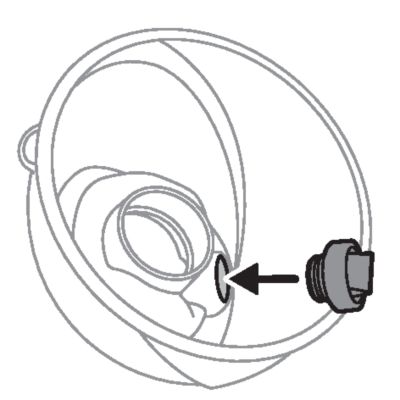
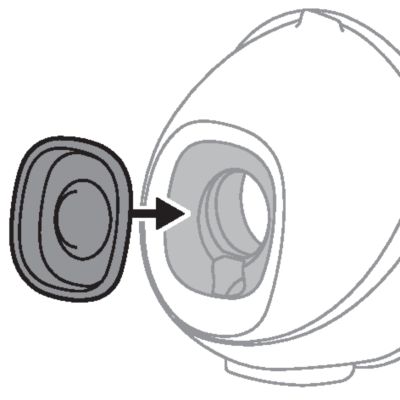
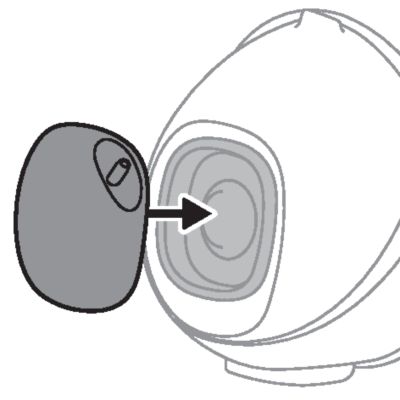
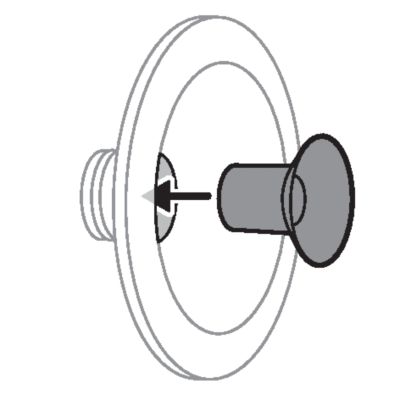
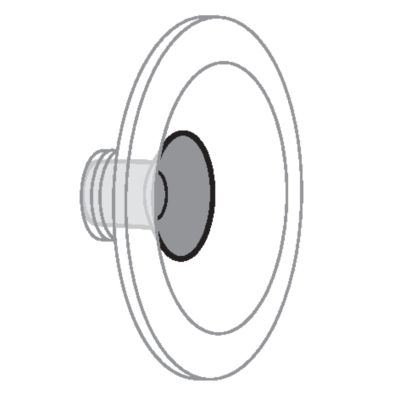
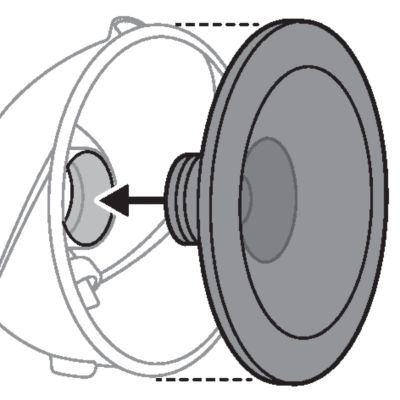
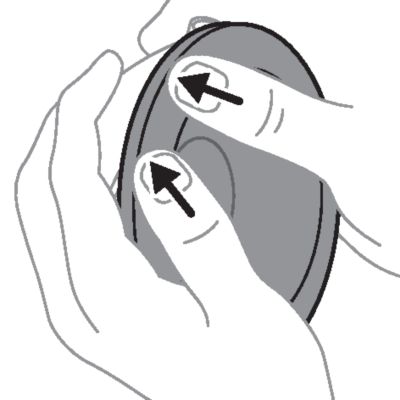
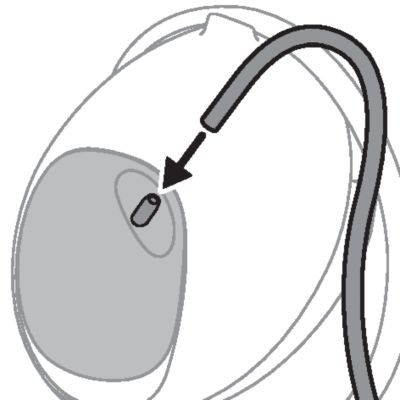
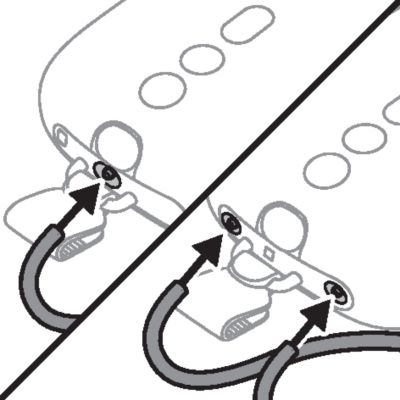
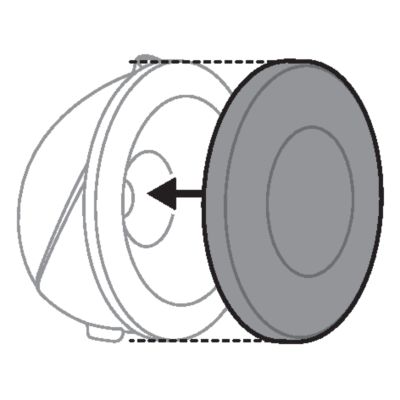
Wearing the motor unit
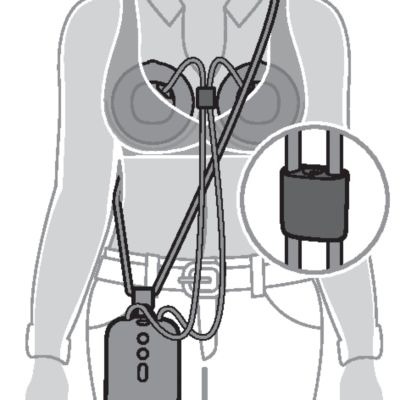
The motor unit can be worn in multiple ways:
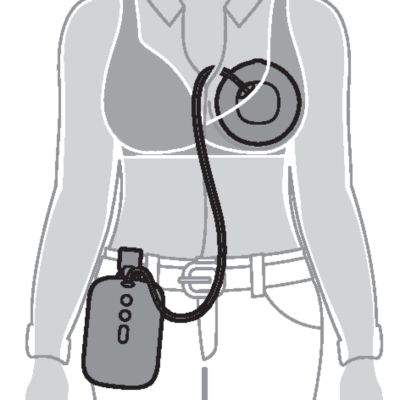
Use the provided clip to attach it to your clothes. The clip is pre-attached to the motor unit. Slide the clip over your clothes to fasten it tightly.
Wear the provided carrying cord around your body. Attach the carrying cord to the clip. Wear the carrying cord cross-body. Make sure that the carrying cord and the silicone tubes do not get entangled. You can adjust the length of the carrying cord.
Motor unit part description
|
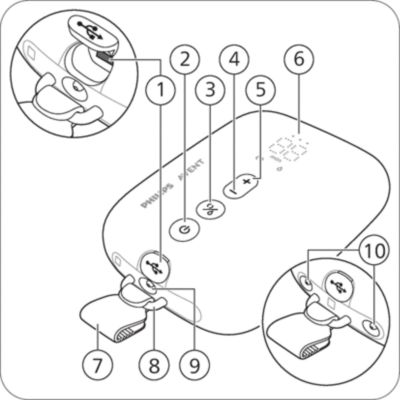
LED display description
Explanation of modes
Pumping instructions
Wash your hands thoroughly with soap and water. Clean your breast and nipple prior to placing the collection cup.
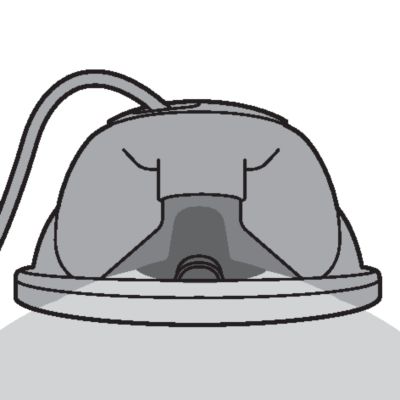
Place the assembled collection cup into your bra, on your breast, with the pouring spout (opening) positioned at the top.
Make sure that the nipple is in the center of the breast shield.
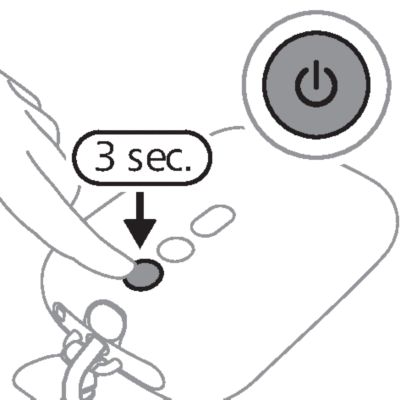
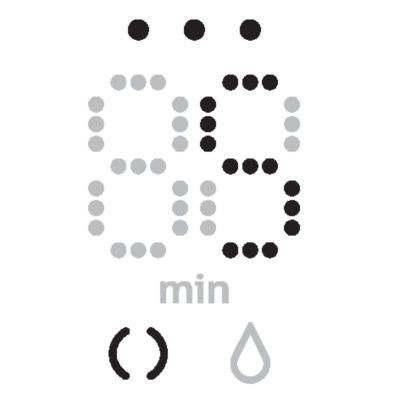
Press and hold the on/off button until the device switches on. The indicator lights go on to indicate that the device is in stimulation mode.
You can look through the top of the transparent cup to check whether the collection cup is positioned properly, and whether the nipple is moving. Your nipple should be in the center of the breast shield and should move in and out of the funnel.
The breast pump starts in the stimulation mode and slowly increases its vacuum to the last used stimulation suction level (or level 5 when used for the first time).
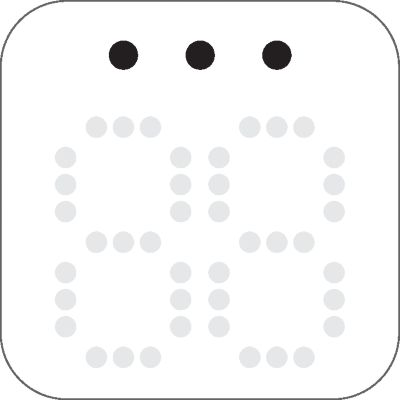
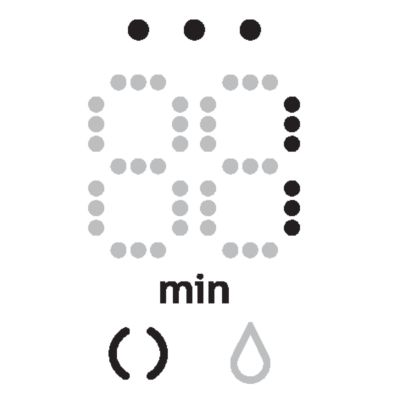
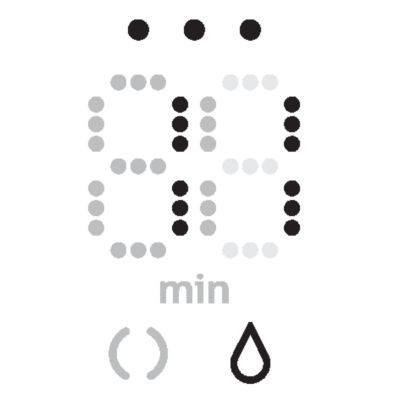
The display shows the running time.
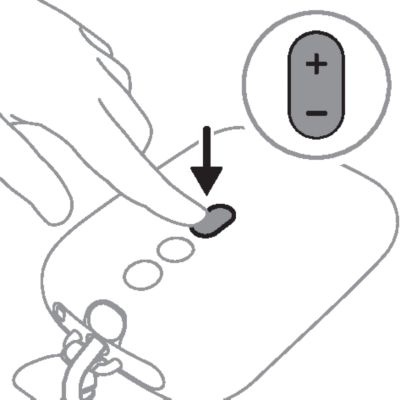
Use the 'level up' and 'level down' buttons to change the suction level to your preference.
After 90 seconds, the breast pump smoothly switches to expression mode and slowly increases its vacuum to the last used expression suction level (or level 11 when used for the first time).
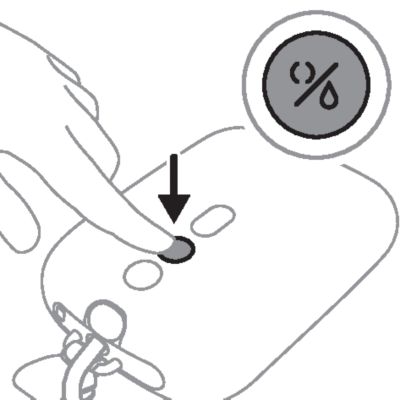
If your milk starts flowing earlier, or if you do not have a milk flow after 90seconds (and want to switch back to the stimulation mode), you can switch modes with the mode selection button.
Briefly press the on/off button if you want to pause. To continue, briefly press the on/off button again.
Press and hold the on/off button to switch off.
After use
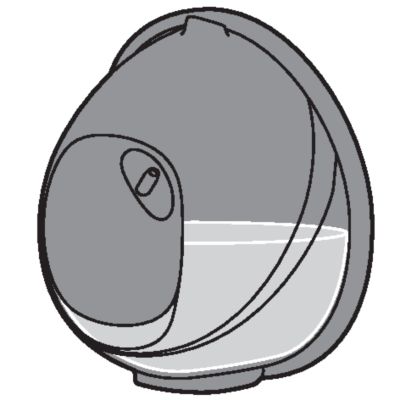
After completing the pumping session, lift the collection cup out of your bra. Place the collection cup on a clean and flat surface. Be careful not to spill any milk from the pouring spout.
To store the breast milk: pour the expressed breast milk from the collection cup into a separate milk storage container (e.g., a bottle or a breast milk storage bag). Do not store expressed breast milk in the collection cup.
Disassemble, clean and disinfect all parts that have been in contact with the breast and breast milk.
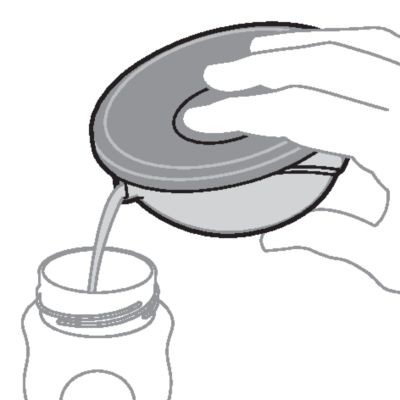
Storing breast milk
Below you find guidelines for storing breast milk:
Storage location | Temperature | Max. storage duration |
|---|---|---|
Room | 16-29 °C | 4 hours |
Refrigerator | 4 °C | 4 days |
Freezer | < 4 °C | 6 months |
The motor unit of the Philips Avent hands-free electric breast pump is compatible with the Philips Avent breast pump kit (SCF335, SCF337, SCF338). The collection cup of the Philips Avent hands-free electric breast pump is compatible with the following motor unit of Philips Avent breast pump Advanced (SCF391, SCF393, SCF395, SCF397), Plus (SCF391, SCF393, SCF373), Premium (SCF392, SCF394, SCF396, SCF398), Premium Plus (SCF392, SCF394), Philips Avent Breast Feeding Starter Set Advanced (SCD340) or Philips Avent Breast Feeding Starter Set Premium (SCD330): |
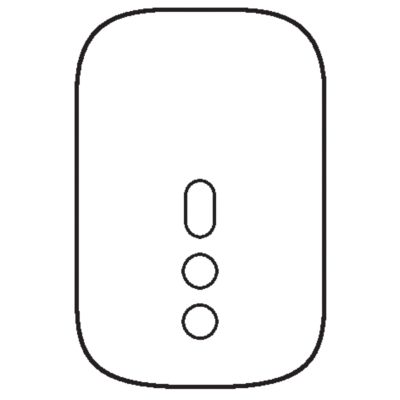
Do not combine it with motor units of other Philips Avent breast pumps or different brands.
To buy accessories for convenience, extra collection cups (for example, for using at work and at home), breast shields and inserts of smaller or larger size, or spare parts, visit www.philips.com/support or go to your Philips dealer. You can also contact the Philips Consumer Care Center in your country.
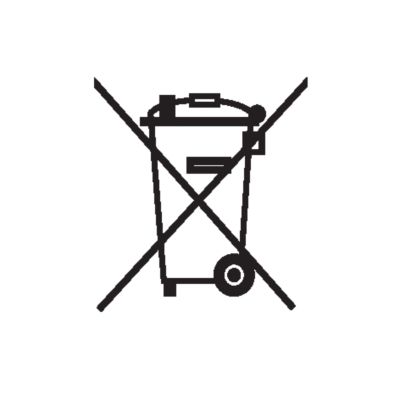
This symbol means that electrical products and batteries shall not be disposed of with normal household waste.
Follow your country’s rules for the separate collection of electrical products and batteries.
The built-in rechargeable battery must only be removed by a qualified professional when the appliance is discarded. Before removing the battery, make sure that the appliance is disconnected from the wall socket and that the battery is completely empty.
Take any necessary safety precautions when you handle tools to open the appliance and when you dispose of the rechargeable battery.
When you handle batteries, make sure that your hands, the product and the batteries are dry.
To avoid accidental short-circuiting of batteries after removal, do not let battery terminals come into contact with metal objects (e.g. coins, hairpins, rings). Do not wrap batteries in aluminum foil. Tape battery terminals or put batteries in a plastic bag before you discard them.
For all product support, power consumption details and the EU Declaration of Conformity, please visit www.philips.com/support.
This chapter summarizes the most common problems you could encounter with the breast pump. If you are unable to solve the problem with the information below, visit www.philips.com/support for a list of frequently asked questions or contact the Consumer Care Center in your country.
I experience pain when I use the breast pump. |
|
I do not feel any suction/the suction level is too low. |
|
The breast pump is not charging. |
|
The breast pump does not switch on (indicator lights do not go on). | Make sure that the battery is charged or connect the breast pump to a power source. Use a power source (an adapter or a power bank) with a USB port, of 5V direct current/2A or 10W for your breast pump. |
The suction of the breast pump is too strong. |
|
Below some common breastfeeding-related conditions are described. If you experience any of these symptoms, contact a healthcare professional or breastfeeding specialist.
Pain sensation | Pain felt on the breast or nipple, or felt as a response to the suction being above a comfortable level. |
Sore nipples | Persistent pain in the nipples at the beginning of the pumping session, or that lasts throughout the entire pumping session, or pain between sessions. |
Engorgement | Swelling of the breast. The breast may feel hard, lumpy and tender. May include erythema (redness) of the breast area and fever. Usually occurs during the first days of lactation. |
Bruise | A reddish-purple discoloration that does not fade when pressed. When a bruise fades, it may become green and brown. |
Thrombus | Thrombus can result into tenderness, pain, redness, swelling and/or heat. |
Injured tissue on nipple (nipple trauma) |
|
Clogged mammary ducts | A red, tender lump on the breast. May include erythema (redness) of the breast area. Can lead to mastitis (breast inflammation) and fever if left untreated. |
Keep the breast pump out of direct sunlight as prolonged exposure may cause discoloration. Store the breast pump and its accessories in a safe, clean and dry place.
If the device has been stored in a hot or cold environment, place it in an environment with a temperature of 20 °C for 30 minutes to let it reach a temperature within the usage conditions (5 °C to 40 °C) before you use it.
To preserve the battery life, fully charge the battery before storing your breast pump for an extended period of time.
This Philips device complies with all applicable standards and regulations regarding exposure to electromagnetic fields.
Vacuum level | Stimulation: -70 to -225 mbar (-53 to -169 mmHg) Expression: -70 to -360 mbar (-53 to -270 mmHg) Intermittent vacuum |
Cycle speed | Stimulation: 105-120 cycles/min, depending on vacuum level Expression: 53-85 cycles/min, depending on vacuum level |
Motor unit rated input | 5 V direct current / 1.8 A |
Battery | Lithium-ion rechargeable battery: 3.6 V, 2600 mAh, 9.4 Wh (internal) |
Automatic power-off | Automatic power-off: after 30 minutes (after the last user interaction), after 15 minutes (in the pause mode). |
Power port | USB-C |
Operating conditions | Temperature: 5 °C to 40 °C Relative humidity: 15 to 90 % (non-condensing) |
Storage and transportation conditions | Temperature: -20 °C to 45 °C Relative humidity: up to 90 % (non-condensing) |
Operating and storage pressure | 700-1060 hPa (<3000 m altitude) |
Net weight | Approximately 275 g (single breast pump), 355 g (double breast pump) 125 g (assembled collection cup with a breast shield (dust) cover) |
External dimensions | Motor unit: 145 mm x 95 mm x 45 mm (length x width x height) Collection cup: 67 mm x 117 mm x 117 mm (length x width x height) |
Device classification | Protection against electric shock: Class III. |
Materials | Motor unit: MABS, ABS, silicone, TPE. Collection cup: polypropylene, silicone. Silicone tube: silicone. Clip, tube coupler: ABS. Carrying cord: polyester, polypropylene, ABS. |
Service life | 500 hours |
Mode of operation | Continuous operation |
Ingress protection | IP22 |
The warning signs and symbols are essential to ensure that you use this product safely and correctly and to protect you and others from injury.
Indicates that the operator's manual or card should be read before continuing the operation. | |
Indicates important information such as warnings and cautions. | |
Indicates usage tips, additional information or a note. | |
Indicates the manufacturer. | |
Indicates the manufacturing date. | |
Indicates that the manufacturer has taken all necessary measures to ensure that the device complies with the applicable safety legislation for distribution within the European Union. | |
Indicates manufacturer's catalog number of the breast pump. | |
Indicates the batch number of the breast pump. | |
Indicates the Global Trade Identification Number and the Lot Code of the breast pump. | |
Indicates that the part of the appliance that comes into physical contact with the user (also known as the applied part) is of type BF (Body Floating) according to IEC 60601-1. The applied part is the collection cup. | |
Indicates the protection against ingress of solid foreign objects greater than 12.5 mm and against harmful effects due to the ingress of dripping water when tilted at 15 degrees. | |
Indicates 'direct current'. | |
Indicates USB. | |
Indicates the storage and transportation temperature limits to which the device can be safely exposed: 20 °C to 45 °C. | |
Indicates the relative humidity upper limits to which the device can be safely exposed: up to 90 %. | |
Indicates 2-year Philips worldwide guarantee. | |
Indicates Forest Stewardship Council. The FSC trademarks enable consumers to choose products that support forest conservation, offer social benefits, and enable the market to provide an incentive for better forest management. | |
This symbol means that electrical products and batteries shall not be disposed of with normal household waste. | |
Indicates that the breast pump meets the requirements of the Singapore Consumer Protection (Safety Requirements) Regulations (CPSR). | |
Indicates that the breast pump meets the requirements of the UK regulations. | |
Indicates that the breast pump meets the requirements of the Argentina regulations. | |
Indicates that the material used in the product is safe for food contact. | |
This logo confirms that the product complies with Ukrainian technical regulations. | |
This logo confirms that the product complies with Serbian technical regulations. | |
Indicates that the material used for the packaging is corrugated cardboard/fiberboard. | |
Indicates that the material used for the packaging is non-corrugated cardboard/fiberboard. | |
Indicates that the material used for the plastic bag is low density polyethylene. | |
Indicates that this product has been certified by the Bureau of Indian Standards. | |
Indicates that the equipment meets the safety requirements specified for class III according to IEC 60335-1. | |
Certification mark for Australia and New Zealand that shows that this product conforms with relevant safety and Electromagnetic Compatibility (EMC) requirements. | |
Indicates that the product should not be used after the period accompanying the symbol. The symbol indicates the expiry date of x years from the manufacturing date (FAB). | |
Indicates that the packaging is to be deposited in the blue container. |




























Indicate that the product or packaging needs to be sorted or brought to a recycling point. | |
Philips support
Is your product not working as it should?
Philips support
Want to know more about your product?